The place
Sacromonte: the hill of caves
How Sacromonte's cave homes were dug, who has lived in them, why the hill carries the name it does, and where the zambra fits into its story.
Book the cave zambra ↗Quick answer
Sacromonte is a hillside neighbourhood of Granada, opposite the Alhambra, whose homes are caves cut into the rock. It has been the traditional neighbourhood of the city's Romani since the 16th century, and it is the setting of the zambra.
A neighbourhood on a hill
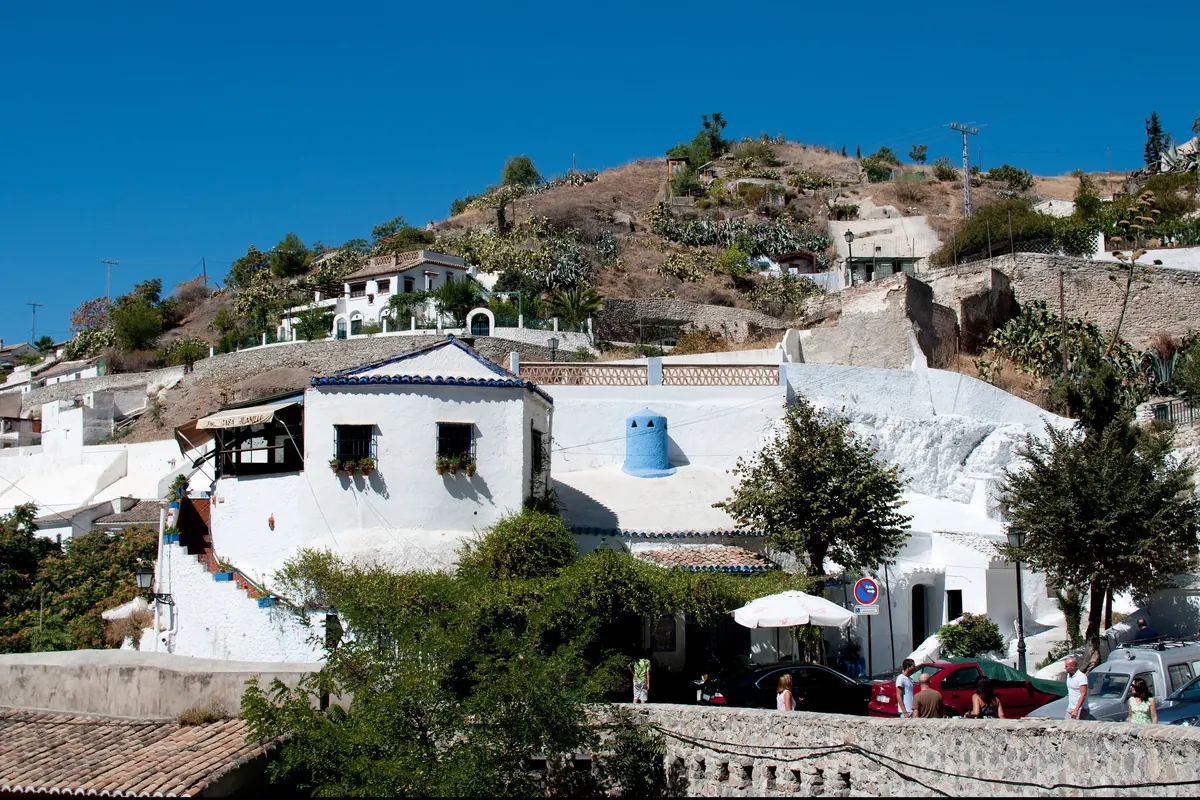
Wikipedia places Sacromonte on the hillside and in the valley of Valparaíso, opposite the Alhambra, and says the neighbourhood occupies both banks of the Darro river. It is one of the six neighbourhoods that make up the district of the Albayzín. Granada's city council calls it the city's most distinctive neighbourhood, known for houses in caves and for views, and considers it the cradle of flamenco.
How the caves were made
Wikipedia says the origin of the cave houses is not very clear, but assumes they began to be dug from the 16th century, after Jewish and Muslim people were expelled from their homes and mixed with the nomadic Romani. The caves became housing for the marginalised, outside the city walls and so outside administrative and church control. To dig one, the builder cut a vertical face into the hillside, set an arch in the middle as a door, and hollowed out as many rooms as the ground allowed. No two are alike.
The Romani of Sacromonte
Wikipedia describes Sacromonte as traditionally the neighbourhood of the Granadian Romani, who settled in Granada after the Christian conquest of 1492. It says they speak a mixed language called Caló, which has declined rapidly over the past century, and that Federico García Lorca wrote about them in his Romancero Gitano. The Granada article adds that the area became famous by the 19th century for its predominantly Gitano inhabitants and has a reputation as a centre of flamenco song and dance.
The abbey and the name
The name has a story of its own. Wikipedia says it comes from events between 1595 and 1599 on the Valparaíso hill, where the supposed discovery of relics and of the so-called lead books, with texts in Latin and Arabic characters, led to the building of the Abbey of Sacromonte. The finds were declared a forgery in the 17th century. The abbey, built on the hill, still stands, and it is a separate matter from the zambra, which comes from the caves rather than the church.
The Darro valley
The river below the hill is the Darro, and Wikipedia says its name seems to derive from the phrase d'auro, of gold, because of its gold-bearing sediments. The museum on the hill calls itself an interpretation centre for the valley, which Wikipedia says gained Site of Cultural Interest status in 2016. The valley is also the gap that separates the cave hill from the Alhambra, which is why the palace complex faces the hill.
The museum caves
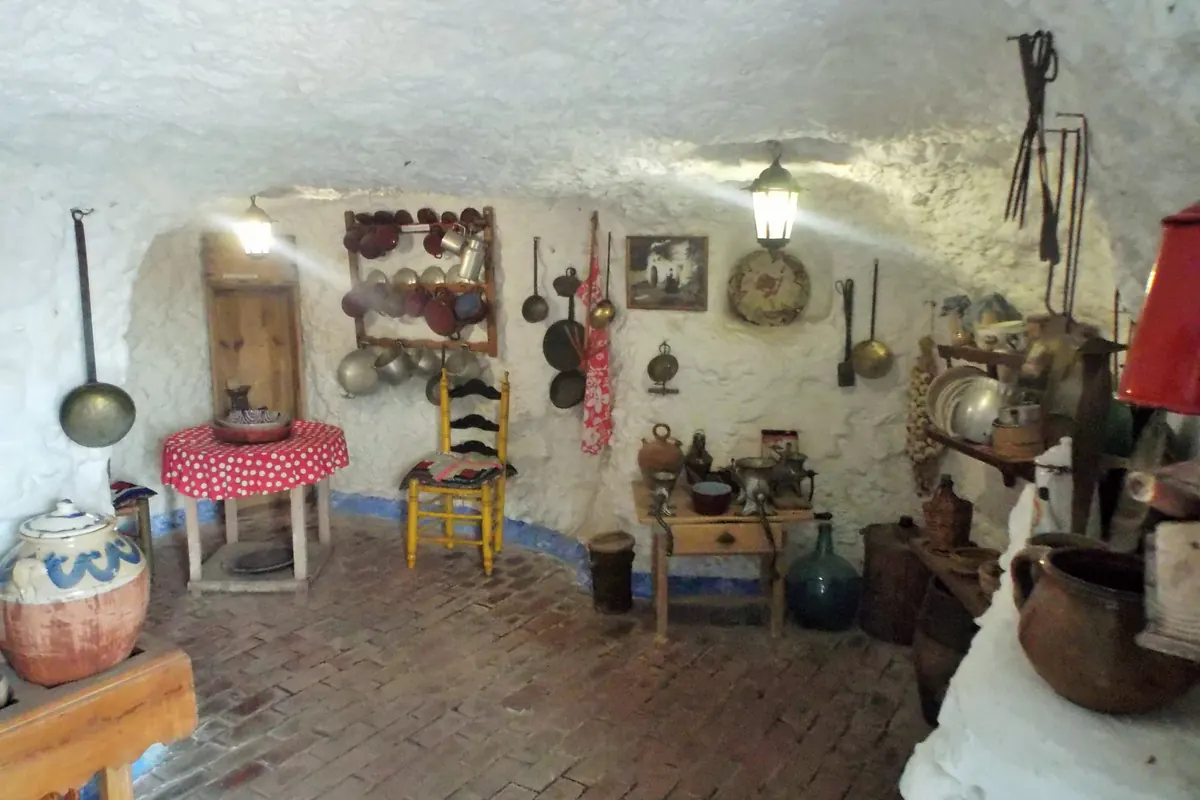
The Sacromonte Caves Museum opened in 2002, occupies 4,800 square metres and has recovered up to eleven caves for viewing in their original state, according to Wikipedia. Visitors can see a cave house, a stable and traditional trades, and one cave is given over to the history of flamenco in Sacromonte. A visit by day shows what the rooms were like to live in, which makes an evening cave show easier to read.
Read next: What is a zambra gitana?
Festivals on the hill
Wikipedia lists the neighbourhood's calendar. The pilgrimage of San Cecilio, Granada's co-patron, climbs to Sacromonte on the first Sunday in February. The district celebrates its own festivals in the first ten days of August, and its popular festivals, with a costume parade through the streets, fall on the first weekend of September. The zambra is the hill's year-round entertainment for visitors, but these dates show a neighbourhood with a calendar of its own.
Where the shows are
The cave on this site's ticket gives its address as Camino del Sacromonte. Both names belong to the same hill. Granada's council says the zambras give performances daily. For the practical side of the climb, see the guide to getting up to Sacromonte.
Read next: Getting up to Sacromonte
Who this isn't for
A flat, paved evening is not what this hill offers. The streets are steep and the caves are cut into a slope. Visitors who prefer a theatre, with fixed seating and a stage, will find the cave format different, and so will anyone who wants a quiet, private visit to the caves where families live; the neighbourhood is home to people, not a stage set.
Frequently asked questions
Why is it called Sacromonte?
Wikipedia says the name comes from events between 1595 and 1599, when relics and the so-called lead books were supposedly found on the hill, leading to the Abbey of Sacromonte.
Do people still live in the caves?
Yes. Andalucía's tourist board says the caves remain family homes, where zambras are held privately alongside shows for visitors.
Sources